Latest AI News
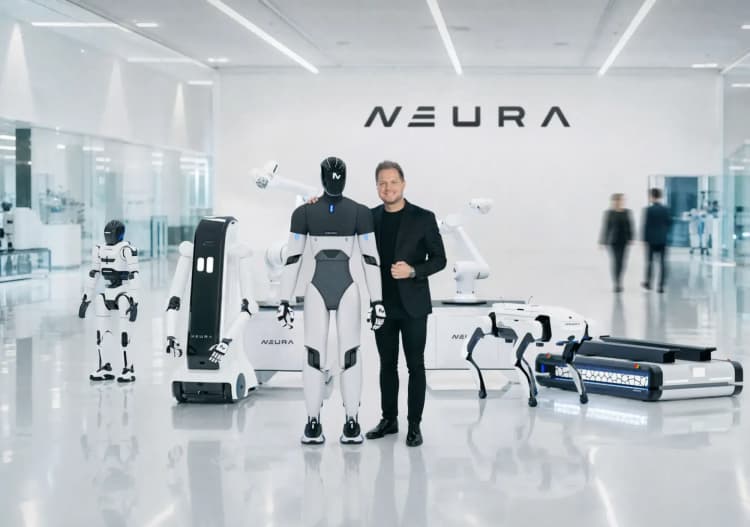
NEURA Robotics Raises Up To $1.4 Billion in Series C, Largest Ever for a Full-Stack Robotics Company
The German robotics startup has secured funding from Tether, Amazon, and NVIDIA, among others, to expand its global presence and aims to produce millions of robots by 2030.
View
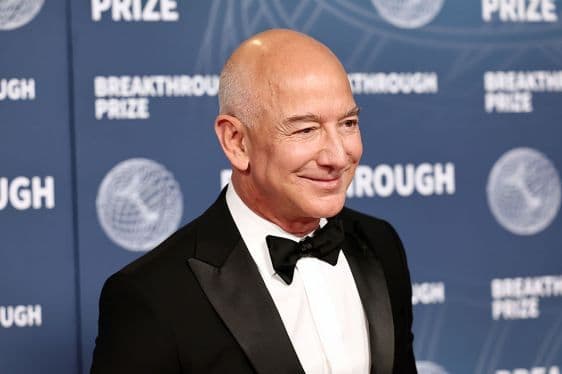
Jeff Bezos’s Prometheus raises $12B to build an ‘artificial general engineer’ for the physical world
Prometheus, the physical AI startup co-founded by Jeff Bezos and Vik Bajaj, the former co-founder of Verily, Google’s life sciences unit, announced it raised $12 billion at a $41 billion valuation. The new funds came from Bezos himself, as well as from JPMorgan Chase, Goldman Sachs, and BlackRock, among others. This is the second fundraise round for Prometheus, which launched late last year with an initial raise of $6.2 billion,according to CNBC. Prometheus is building what it calls an “artificial general engineer” — software capable of automating the design and manufacturing of complex physical systems, from jet engines to drug compounds. The ambition is sweeping: replace large swaths of engineering work with AI. Although the startup will automate many aspects of an engineer’s job, Bezos told CNBC that the productivity gains AI delivers will lead to what he calls “labor scarcity” — his term for a world where demand for human workers outpaces supply. That puts him at odds with a number of prominent voices in tech. While some AI leaders predict widespread job losses, Bezos sees it differently. “Significant productivity in the economy is going to raise the standard of living,” he said. “People who today have two-earner households, they’ll become one-earner households. Maybe some people who are working overtime will stop working overtime.” The company, which currently has 150 employees across offices in San Francisco, London, and Zurich, is keeping the specifics of what it has already built under wraps. Bezos indicated that a large portion of the capital will go toward the company’s large compute needs. Bezos knows something about labor at scale. Amazon — where he serves as executive chairman and is the largest individual shareholder — employs more than 1.5 million people worldwide and over the past year, under CEO Andy Jassy, has laid offtens of thousandsof people as the company has accelerated its own automation push. At $41 billion, Prometheus is one of the most richly valued AI startups ever funded, and one of the largest single bets on the physical AI sector. But it isn’t the only company attracting massive investor interest. In recent months, venture capitalists have increasinglypoured capital into physical AI, a booming sector that investors and founders argue is inherently more defensible than pure software — because the physical world creates moats that code alone cannot.
View
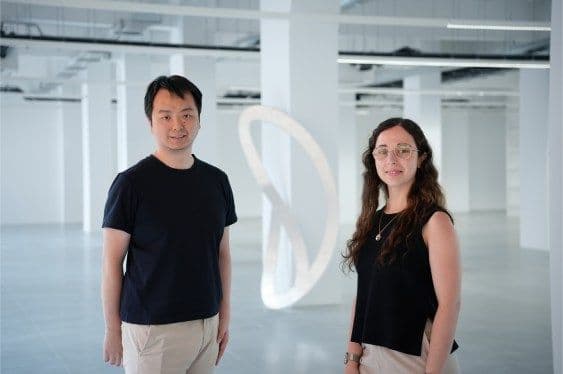
Theker just raised $85M to build the factory robot that doesn’t specialize in anything
Humanoids aren’t quite ready to replace factory workers, but the industry can’t wait. Faced with labor shortages, manufacturers have shown growing interest in startups that promise faster automation without the usual tradeoffs. That’s the bet behindTheker, an AI robotics startup that aims to go beyond robots trained for a single task. “If you always have to put the same cookie in the same box, that works perfectly, but most processes aren’t like that,” co-founder Carla Gómez Cano told TechCrunch. Theker is designed for that messier reality. Unlike humanoid robots designed around a fixed form — thinkBoston Dynamics— Theker’s machines are built to be reconfigured. Their hands, arms, and overall form can be swapped out or resized depending on the task, whether that’s sorting packages, packing clothing, or handling bottles and cans in a warehouse. That Inditex, Zara’s parent company, signed on as an early backer is a signal of where Theker’s ambitions start, not where they end. The company’s broader goal is to move beyond retail into heavier industrial settings like manufacturing, where the complexity and scale of manual tasks is even greater. This generalist ambition has helped cement Theker’s status as one ofEurope’s hot startups to watch— and raise capital accordingly. The Barcelona-based startup has just raised $85 million in what it’s calling “Europe’s largest ever robotics Series A.” (We haven’t found a larger one in our records, either.) Less than a year aftera record seed round, this Series A was led by American VC firm CRV and backed by a mix of traditional and strategic investors, including Samsung and Aglaé Ventures, the investment vehicle tied to LVMH chairman Bernard Arnault. Gómez Cano said Samsung is not a client yet but that the two are in advanced discussions. Theker would welcome having the Korean company as a customer, supplier, and investor simultaneously — a trifecta that would give the startup both revenue and credibility in manufacturing at scale. She also noted that she and co-founder Jiaqiang Ye Zhu “didn’t build Theker to run pilots,” so the team skips innovation departments entirely and goes straight to logistics or operations, where deals are real and timelines are shorter. To demonstrate that the company can actually deliver on that, Theker has a showroom in central Barcelona, and plans to open others as it expands across Europe, the U.S. and Asia. It will also grow its headcount across tech, deployment, and sales. “We already received 15,000 job applications and have to filter like crazy,” Gómez Cano said. She estimated that the team could grow from dozens to up to 120 people by the end of the year, then caught herself: “I am saying that, but I also said that we’d raise $30 or $40 million!” That Theker managed to raise twice its target also reinforces the startup’s conviction in keeping its HQ in Barcelona, a growingrobotics hub, and in Europe’s tech ecosystem more broadly. “It has never been a barrier to acceleration for us, so we are making the most of it,” Gómez Cano said.
View
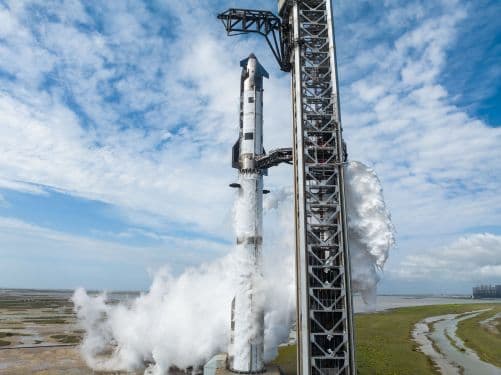
SpaceX SPV investors won’t know their true holdings until post-IPO lock-ups lift
SpaceX makes its public debut on Friday and some investors who backed the company through special purpose vehicles (SPVs) still don’t know how many shares they’re entitled to or whether they’ll get any shares at all. Investing through SPVs, where multiple parties pool their money to invest in a single company, has been around for a while. But SpaceX represents an unprecedented case of an IPO with multiple layers of these vehicles. Since demand for SpaceX allocations has been so high in recent years, investors in an SPV have occasionally formed a new SPV from their shares, creating a structure sometimes stacked four or five layers deep. SpaceX will be the first major test of the legitimacy of multi-layer SPV. In recent months, Anthropic and Anduril have announced that they are disallowing these structures. Nearly a dozen SPV managers and secondary market investors who spoke to TechCrunch said that backers in lower-tier vehicles might find they own fewer shares than they think or, in rare cases, that they may not receive any shares at all. In most situations, these investors won’t learn how many SpaceX shares they actually own until the company’s rolling lock-ups, scheduled to take place over about four months, begin to lift. That’s because SPV managers won’t begin distributing shares to investors in these vehicles until they get access to the shares themselves, sources told TechCrunch. Lock-up agreements prevent insiders, including employees, their friends and family, and venture investors, from selling shares for a set period after an IPO to prevent excessive selling pressure on the stock. The first-layer SPV will have 30 days to distribute stock to its investors, said Justin Ernest, founder and managing partnerof Sabertooth Capital, a firm that invests primarily in first-layer SPVs.Consequently, the next layer down likely won’t get its shares for as long as 30 days, meaning the vehicle below that must wait even longer to deliver stock to its own backers. For the final disbursement, the bottom SPV layer may have to wait eight or nine months, Ernest estimates. A secondary investor, who asked to remain anonymous, told TechCrunch that some investors in “messy” multi-layered SPVs will be surprised to learn that some of the shares they expect to get will be “eroded by fees” pocketed by the SPV. Ideally, the SPV manager communicates with the investors in their vehicle from the IPO date on. “Problem is you have a communication train with each person only knowing what’s going on in the layer above them,” the secondary investor said. In short, the structural ownership of these vehicles has become so highly convoluted that even the best-intentioned SPV sponsors may end up inadvertently misleading their investors. The biggest concern for downstream SPV investors is that they may not get any shares in SpaceX. Giovanni Pennetta, the manager of Sestante Capital, was recently sentenced to four years in prison for fabricating access to non-existent allocations in the defense tech company Anduril. The fear, of course, is that Pennetta is not the only deceptive sponsor out there. Investors at the bottom of these structures essentially had to confirm that every single manager above them was legitimate. But given the messy structures of these deals, it’s likely some buyers didn’t vet the entire chain. “A friend just shared in confidence – they bought SpaceX through a 2 layer SPV in 2021. The returns are supposed to be worth any fees, the only problem – the SPV manager stopped responding to emails or calls,” Nick Davidov, founder of venture firm Davidovs Venture Collective, postedon X last month. He wrote that the investor hasn’t heard from the SPV manager for a year. Idan Miller, managing partner at the secondary market Unicorns Exchange, is convinced that a few other bad actors will be revealed once lock ups expire. “Once the lock up of the shares is removed, and these SPVs will start selling the shares, there will be some vehicles that will be revealed as scammers or fraud,” Miller told TechCrunch.
View

SpaceX officially prices shares at $135 in the largest IPO ever
For once, SpaceX is ahead of schedule: Elon Musk’s space and AI conglomerate officially confirmed that it has raised $75 billion from the sale of its shares to its underwriters, who are set to begin marketing the company on the Nasdaq stock exchange Friday. SpaceX priced its 555.6 million shares at $135 each, the company said in anupdate on its website. That makes SpaceX officially the largest IPO in history, easily eclipsing the $24.9 billion in funds raised by Saudi Aramco during its 2019 public markets debut. At this price, the deal also looks set to make Musk the world’s first trillionaire. The company, officially known as Space Exploration Technologies Corp., will trade under the SPCX ticker symbol. While IPO pricing typically works itself out as markets open, SpaceX took an unusual approach in setting the price well in advance. The company was testing its $135 share target with investors before its official roadshow started, the Financial Timesreported. And that offering, which eschewed traditional IPO pricing practices, attracted four times the available shares,per Bloomberg. As active trading gets underway tomorrow, SpaceX’s share price may sink or rise. But anecdotal reports suggest that big institutional investors and individual buyers are lining up to purchase shares in the 24-year-old technology company. If the sale is as oversubscribed as the talkative bankers make it out to be, they have an option to bring an additional 83.3 million shares to market, which would raise another $11 billion at the company’s opening price. Hyperliquid, a crypto betting market that attempts to offer synthetic exposure to SpaceX stock,currently pricesthe shares at $167, suggesting that market participants expect a classic 20% IPO pop on the first day of trading. In the longer term, there are big open questions about how SpaceX will be able to justify its eye-popping valuation. The company’soutstanding engineering projects, from the world’s largest reusable rocket to a new American chip fab, fill up a daunting to-do list. Thebiggest beneficiary of the offeringis Musk himself. He owns just under 850 million Class A shares entitled to 1 vote per share. He is also entitled to another 5.6 billion Class B shares, which comes with 10 votes per share and includes the billion shares contingent on a long-shot bet that a million people will end up living in a SpaceX colony on Mars. The listing will deliver Antonio Gracias, founder and CEO of Valor Management, 503.4 million shares, putting the value of his position at nearly $68 billion at the IPO price. Other major shareholders poised to gain from the historic offering include SpaceX board member and investor Luke Nosek, who owns 33 million shares, and COO Gwynne Shotwell, who holds nearly 12.6 million shares. The IPO will also deliver significant windfalls to many of the roughly 400 venture capitalists who backed the company during its two decades as a private entity, a period in which it raised about $40 billion in private capital. Additionally, a massive pool of smaller investors who backed SpaceX viaspecial purpose vehicles(SPVs) are also set to see their initial capital multiply. However, due to the complexities of these vehicles, some may not know the exact magnitude of their gains for months after SpaceX make its public market debut. Additionally, an uncountable number of smaller investors who invested in SpaceX via special purpose vehicles (SPVs) may also see their original money multiplied. However, some of these investorswon’t know the magnitudeof their gains or whether they are entitled to them until after the company’s staggered lock-up period expires.
View
DoorDash’s new AI chatbot lets you order with prompts and photos
DoorDashannouncedon Thursday that it’s launching a new AI chatbot that lets users order food and groceries with text prompts and photos in its latest AI push. The chatbot, called “Ask DoorDash,” allows users to search the app for what they’re looking for in their own words instead of having to scroll through restaurants and stores to build a cart. You can tell the chatbot what you’re in the mood for, share a recipe link to find the items, or describe the reservation you’re looking for. “Traditional search works best when you know the exact restaurant or table you’re looking for,” DoorDash wrote in the blog post. “Ask DoorDash is designed for the moments when you don’t.” Food delivery apps and tech giants are betting that AI can help make shopping more conversational and personalized, as companies race to make AI assistants a standard part of everyday life. In February, Uber Easts launched anAI-powered “Cart Assistant,” while Instacart has rolled out anAI shopping assistantthat grocers can offer to their customers. DoorDash’s app can build your grocery cart based on a photo from a cookbook, a picture of your grocery list, or a recipe. DoorDash will then add all the items and their correct quantities to your cart. It will prompt users to check if they already have staples like sugar and butter, so they don’t buy something they already have. You can also ask the chatbot to reorder your last grocery cart or suggest new items based on your previous orders, DoorDash says. As for ordering food, you can tell the chatbot that you want a “filling dinner for a family of 4.” The app will then surface restaurants alongside a personalized blurb explaining why it matches your search. You can narrow the results even further with a query like, “Show me kid-friendly vegetarian spots with mild options.” Once you select a place, you can ask DoorDash to build a cart with suggestions based on your dietary preferences, budget, group size, or past orders. With Ask DoorDash for Reservations, users can ask the chatbot to find a “table for two downtown for a date-night dinner around 8 PM.” The app will then surface restaurants with availability. You can refine the results further by asking for something a little more intimate. The chatbot is rolling out on iOS in select regions for restaurant search and grocery shopping, and within DoorDash Reservations. It will reach more users across the U.S. in the coming weeks, the company says.
View

Pool’s new app turns your screenshots into something useful
For years, your phone’s Camera Roll has served dual purposes. In addition to helping you revisit special moments, it has also served as an archive for all sorts of things you find online, like recipes, fashion inspiration, travel ideas, interesting quotes, funny tweets, product recommendations, and more. Today, a new app calledPoolis arriving to help you finally make sense of this digital clutter. To get started withPool, you simply give it permission to access your photos, which are moved into categories it calls “pools.” The pools created in the app are entirely dependent on the products, places, or things that you’ve saved over time, making them specific to you. The app is one of many reinventing bookmarking in the AI era. Startups likemymind,Fabric, andRaindrophelp users organize links, images, or other saved content, but Pool focuses specifically on screenshots and then uses AI to help users rediscover and act on things they intended to revisit later. Once imported, Pool is able to track down the original link associated with a given screenshot. For instance, if the screenshot was of a product you were thinking of buying, it would link to the retailer’s website. If it was a recipe you saw on Instagram, it could pull up the ingredients and instructions the creator had shared. And so on. The idea, explained Pool co-founderMaxime Junique, came about because both he and his co-founderPiet Terheydenhad faced the same problem: They would screenshot things they wanted to remember, but then could never find them again. “It sounds pretty obvious, right now, when we say it, but it’s something that we do so naturally — you don’t notice it, necessarily,” said Junique. The founders, who met years ago in a co-working space, asked their friends about the issue. The friends agreed that they would often screenshot and forget things, too, like design ideas or other types of inspiration. The app was actually the first product to emerge fromSpinoff Studio, the founders’ product and design studio, around three years ago. The first version was built in Lisbon over a couple of weeks while the founders lived out of a van, cranking out the landing page, website, and initial build. But they soon realized they needed to build some products that made money first, so they pivoted to B2B SaaS and shelved Pool. The studio went on to build other products, including the CRM softwareWaitless, which was acquired last year. What brought Pool back to life was the maturation of AI. Suddenly, its core idea of making sense of personal, largely unstructured datasets seemed feasible. “We were like, it seems like a perfect time to go after this idea,” Junique told TechCrunch. “And it also seemed to us like it’s a super untapped, unexplored dataset for AI. Everyone goes after emails, bank transactions, chat logs — all of those productivity-first datasets. Who is going after this really, deeply emotional dataset we all own?” Pool’s app also treats your screenshots like memories, meaning some of them are more relevant at the moment, while others disappear over time. For example, if you screenshot the barcode to an event ticket, it could disappear later on after the event has taken place. Meanwhile, if you screenshot a flyer on Instagram about an upcoming event, Pool’s AI agents can help you find where to buy the tickets and link to the ticketing site. To find things in Pool, you can search or ask its built-in AI assistant for help. Next up, the founders plan to take this concept into a second, separate app that will operate as a personal assistant of sorts. Pool’s mascot — the little rubber duck you press and drag across the screen to enter Pool at launch — will become part of the brand for this agentic AI app they’re planning. The founders were in Lisbon when we chatted — no longer in a van! — but were headed to San Francisco in late May to meet with investors. The startup previously raised a pre-seed round of just over $2 million from General Catalyst, Kima Ventures, Paris-basedSource Ventures, and other angels, including Winston Du, Julian Blessin, and Thomas Ricouard. Pool is available now as afree download on iOS.
View
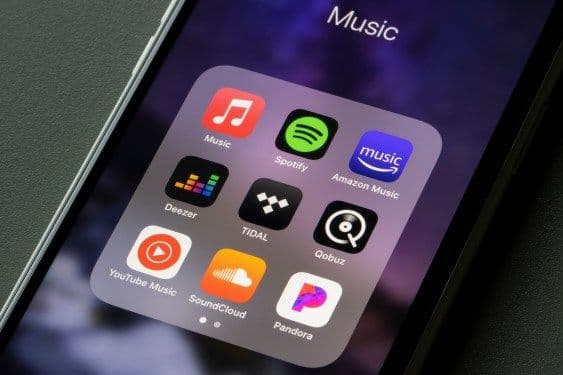
Deezer’s new tool can identify AI music from Spotify, Apple Music, and others
As the rise of AI-generated music on streaming services continues, concerns are growing regarding how AI companies use copyrighted material to train their models, as well as how potential manipulations in streaming systems could lead to fraud. However, many music streaming services have yet to launch AI music detection tools. So, the streamer Deezer has taken matters into its own hands. In the ongoing effort to tackle this issue, Deezerintroduceda tool that scans playlists from various streaming platforms to identify AI-generated tracks. Announced on Thursday, this free online AI music detector supports 27 languages and gives users from 20 of the most popular platforms the chance to see if their playlists include any AI-generated songs. The launch further positions Deezer as one of the music industry’s most aggressive opponents of AI music, which could be a selling point for its service among consumers. While rivals likeApple MusicandSpotifyhave opted for a tagging approach, Deezer actively removes AI tracks from recommendations and excludes them from editorial playlists. It also recently began offering itsAI detection technology to rival platforms. To use the new tool, go to Deezer’sAI music detector website,select your streaming service, and allow Deezer to access your playlists. Once you import your playlists, the service scans for AI content, notifies you of any findings, and even offers the option to share the results. The tool is compatible with Spotify, Apple Music, SoundCloud, and YouTube Music, among other platforms. “By detecting and tagging AI-generated music over the past year and a half, Deezer has been at the forefront of transparency in music streaming. No other company has followed our lead yet, so we decided to make it possible for everyone to check if their playlists include synthetic music, no matter which streaming platform they use,” CEO Alexis Lanternier said in a statement. Notably, the company revealed in today’s announcement that it is carefully considering future steps, such as updating supplier policies or removing content. This would follow inBandcamp’s footsteps, which banned AI music earlier this year. The launch of the new tool comes on the heels of Deezerrevealingthat a staggering 44% of all new music uploaded to its platform is AI-generated. The company is currently being flooded with nearly 75,000 AI-generated tracks daily, which totals over two million each month. Despite this influx, the listening rate for AI-generated music remains relatively low, accounting for just 1-3% of total streams. Around 85% of these streams are flagged as fraudulent and are demonetized by the platform.
View

Can India’s AI Curriculum Overhaul Deliver Industry-Ready Talent?
The AI Curriculum Taskforce has recommended increasing practical exposure in AI programmes from the current 25–30% to as much as 75%.
View
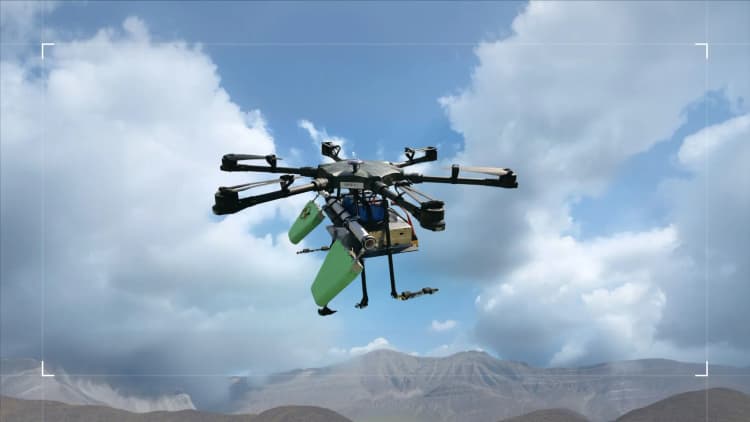
Space Startup PierSight Opens Trials for New Forest-Penetrating SAR System
The SAR system, Vidura, aims to help defence operators detect movement and structures beneath dense forest cover.
View

EY GDS Launches AI-Focused ey.ai Center for Reimagination in Bengaluru
The facility brings together AI, emerging technologies, industry expertise and human-centred design, allowing business leaders to test ideas and evaluate transformation opportunities.
View
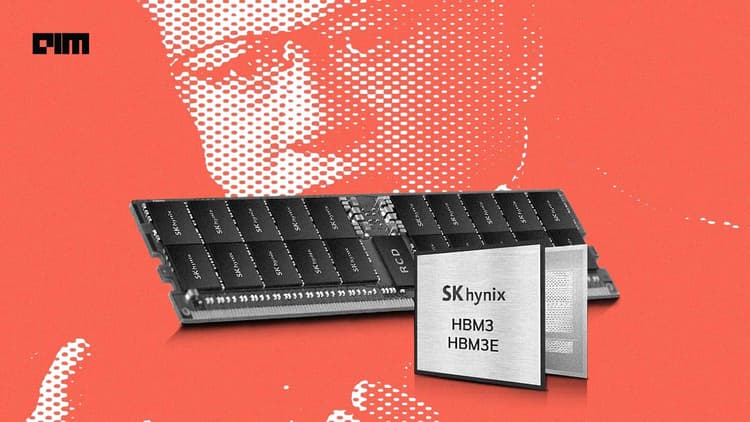
The Trillion-Dollar Shovel Behind NVIDIA’s Gold Rush
From HBM leader to trillion-dollar giant, SK Hynix has become a critical pillar of the AI supply chain.
View