Latest AI News
Happiest Minds Launches Agentic AI Platform to Automate Software Engineering Tasks
The platform deploys autonomous software engineering agents across development workflows, signalling a shift from AI assistants to AI systems capable of executing end-to-end engineering tasks with human oversight.
View
TCS Launches Oracle AI Data Lab in Kolkata, Plans Expansion to 4 More Cities
TCS’ Oracle AI Data Platform Lab marked a deeper push into enterprise AI and data modernisation.
View
Keysight, Siemens Software Partner for AI-Led PLM Testing
The partnership brings AI-based test automation to Teamcenter users managing product lifecycle systems.
View

Cheaper, faster, and culturally aware, Avataar’s video AI is built for India’s scale
India’s AI model output has been slow compared to the U.S., Europe, and China. Only a few startups are releasing models, and most of them are large language models or voice models. To encourage more development, the government launched theIndia AI Mission, a roughly $1.2 billion initiative that — among other things — gives selected startups access to subsidized GPU compute in exchange for releasing their models publicly. One of the 12 startups selected for the program,Avataar AI, has launched a new video model called Varya that is built to understand local context — such as identifying different festivals, food, and clothing. The Peak XV-backed startup, which focuses oncreating video tools for e-commerce, didn’t build Varya from scratch. It started with Wan 2.2, a publicly available video generation model released by Alibaba, and used a technique called distillation — essentially compressing the model’s capabilities into a leaner, faster version optimized for Avataar’s specific use cases. The result is a model that runs in four steps rather than Wan 2.2’s 50, producing video 10 times faster and at a fraction of the cost. To put that in concrete terms: using an NVIDIA H200 GPU, Varya can generate a 5-second 720p clip in 45 seconds, compared to 1,230 seconds for Wan 2.2. The most striking aspect of Varya may be its price. The company plans to charge ₹0.48 ($0.005) per second of video on its hosted service — far cheaper than models like Veo, Kling, Luma, and Runway, which typically charge $0.10 or more per second. That’s a roughly 20x price difference. “India is a video-first market. We see this across every large consumer internet product in India: video wins over text. Current AI video models are too expensive for population-scale use in India. If video AI is going to reach students, teachers, MSMEs, creators, enterprises, and public services, costs have to come down dramatically. Cost is the biggest unlock for AI adoption in India,” Peak XV’s managing director Rajan Anandan told TechCrunch. Image and video generation models often miss cultural nuances and produce stereotyped or generic outputs — a problem TechCrunch hasreported on before. Avataar AI says it has used curated data to train Varya to recognize cultural nuances including food, clothing, architecture, and festivals. Varya will be released as an open-weight model onIndia’s AI Kosh portal— the Indian government’s centralized repository for publicly available AI models and datasets — along with its training data, meaning developers can self-host or modify it for their own needs. Avataar also plans to make the model available to its enterprise customers and says it is open to partnerships with video tools including Higgsfield and Adobe Firefly. Anyone can try it now on its website using text prompts or reference images. Varya’s launch reflects a fundamental tradeoff in India’s AI ambitions. Industry veterans have noted that India can make its mark in AI bycreating applicationsand a robustdeveloper ecosystemrather than competing on foundation models. And there’s a reason for that pragmatism: model development has been slower in India than in global rivals due to alack of computeand limited quality data availability. The India AI Mission is also part of a broader government push to close that gap. Last year, it selected 12 startups — Avataar AI among them — to develop AI models and provided them with cost-efficient compute. Earlier this year, IT minister Ashwini Vaishnaw said India aims to attract$200 billionin AI investment by 2028 and more thandoubleits GPU capacity within six months.
View
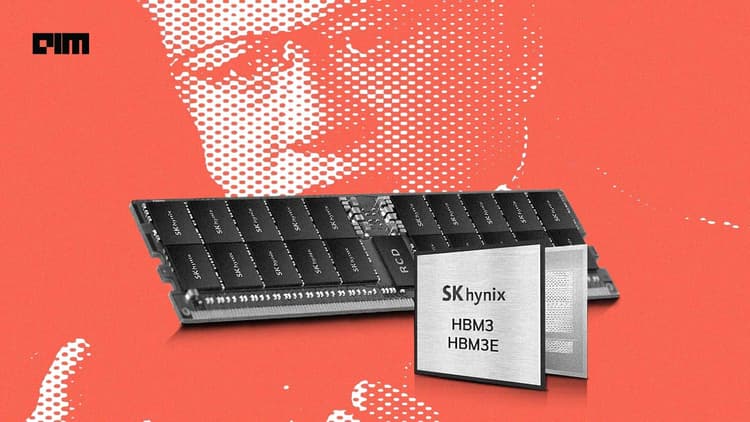
Why NVIDIA Needs SK Hynix More Than Ever
From HBM leader to trillion-dollar giant, SK Hynix has become a critical pillar of the AI supply chain.
View
OpenAI Wants Codex Working Even When the Laptop is Closed
OpenAI is acquiring Ona to give Codex persistent cloud environments, allowing AI agents to continue working on tasks long after users leave a session.
View
Salesforce Says the Future of Enterprise AI is ‘Headless’
Salesforce sees APIs, data integration, and context as the foundation for AI to deliver insights directly into workflows.
View
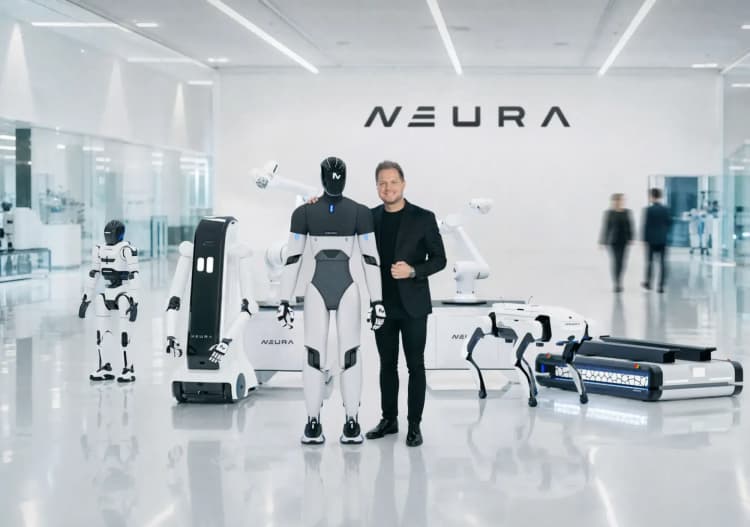
NEURA Robotics Raises Up To $1.4 Billion in Series C, Largest Ever for a Full-Stack Robotics Company
The German robotics startup has secured funding from Tether, Amazon, and NVIDIA, among others, to expand its global presence and aims to produce millions of robots by 2030.
View
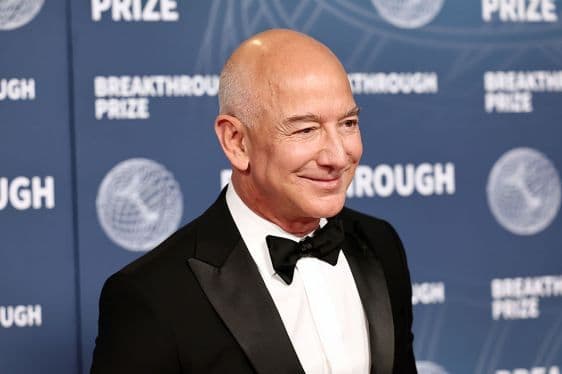
Jeff Bezos’s Prometheus raises $12B to build an ‘artificial general engineer’ for the physical world
Prometheus, the physical AI startup co-founded by Jeff Bezos and Vik Bajaj, the former co-founder of Verily, Google’s life sciences unit, announced it raised $12 billion at a $41 billion valuation. The new funds came from Bezos himself, as well as from JPMorgan Chase, Goldman Sachs, and BlackRock, among others. This is the second fundraise round for Prometheus, which launched late last year with an initial raise of $6.2 billion,according to CNBC. Prometheus is building what it calls an “artificial general engineer” — software capable of automating the design and manufacturing of complex physical systems, from jet engines to drug compounds. The ambition is sweeping: replace large swaths of engineering work with AI. Although the startup will automate many aspects of an engineer’s job, Bezos told CNBC that the productivity gains AI delivers will lead to what he calls “labor scarcity” — his term for a world where demand for human workers outpaces supply. That puts him at odds with a number of prominent voices in tech. While some AI leaders predict widespread job losses, Bezos sees it differently. “Significant productivity in the economy is going to raise the standard of living,” he said. “People who today have two-earner households, they’ll become one-earner households. Maybe some people who are working overtime will stop working overtime.” The company, which currently has 150 employees across offices in San Francisco, London, and Zurich, is keeping the specifics of what it has already built under wraps. Bezos indicated that a large portion of the capital will go toward the company’s large compute needs. Bezos knows something about labor at scale. Amazon — where he serves as executive chairman and is the largest individual shareholder — employs more than 1.5 million people worldwide and over the past year, under CEO Andy Jassy, has laid offtens of thousandsof people as the company has accelerated its own automation push. At $41 billion, Prometheus is one of the most richly valued AI startups ever funded, and one of the largest single bets on the physical AI sector. But it isn’t the only company attracting massive investor interest. In recent months, venture capitalists have increasinglypoured capital into physical AI, a booming sector that investors and founders argue is inherently more defensible than pure software — because the physical world creates moats that code alone cannot.
View
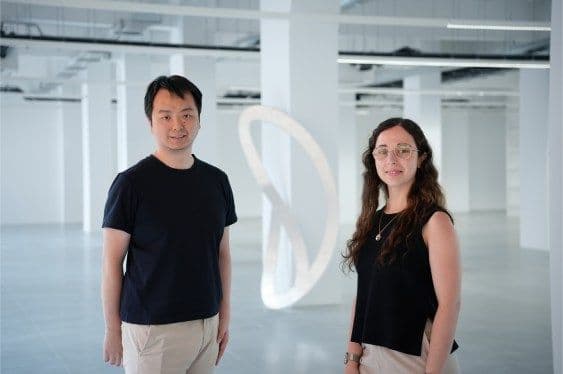
Theker just raised $85M to build the factory robot that doesn’t specialize in anything
Humanoids aren’t quite ready to replace factory workers, but the industry can’t wait. Faced with labor shortages, manufacturers have shown growing interest in startups that promise faster automation without the usual tradeoffs. That’s the bet behindTheker, an AI robotics startup that aims to go beyond robots trained for a single task. “If you always have to put the same cookie in the same box, that works perfectly, but most processes aren’t like that,” co-founder Carla Gómez Cano told TechCrunch. Theker is designed for that messier reality. Unlike humanoid robots designed around a fixed form — thinkBoston Dynamics— Theker’s machines are built to be reconfigured. Their hands, arms, and overall form can be swapped out or resized depending on the task, whether that’s sorting packages, packing clothing, or handling bottles and cans in a warehouse. That Inditex, Zara’s parent company, signed on as an early backer is a signal of where Theker’s ambitions start, not where they end. The company’s broader goal is to move beyond retail into heavier industrial settings like manufacturing, where the complexity and scale of manual tasks is even greater. This generalist ambition has helped cement Theker’s status as one ofEurope’s hot startups to watch— and raise capital accordingly. The Barcelona-based startup has just raised $85 million in what it’s calling “Europe’s largest ever robotics Series A.” (We haven’t found a larger one in our records, either.) Less than a year aftera record seed round, this Series A was led by American VC firm CRV and backed by a mix of traditional and strategic investors, including Samsung and Aglaé Ventures, the investment vehicle tied to LVMH chairman Bernard Arnault. Gómez Cano said Samsung is not a client yet but that the two are in advanced discussions. Theker would welcome having the Korean company as a customer, supplier, and investor simultaneously — a trifecta that would give the startup both revenue and credibility in manufacturing at scale. She also noted that she and co-founder Jiaqiang Ye Zhu “didn’t build Theker to run pilots,” so the team skips innovation departments entirely and goes straight to logistics or operations, where deals are real and timelines are shorter. To demonstrate that the company can actually deliver on that, Theker has a showroom in central Barcelona, and plans to open others as it expands across Europe, the U.S. and Asia. It will also grow its headcount across tech, deployment, and sales. “We already received 15,000 job applications and have to filter like crazy,” Gómez Cano said. She estimated that the team could grow from dozens to up to 120 people by the end of the year, then caught herself: “I am saying that, but I also said that we’d raise $30 or $40 million!” That Theker managed to raise twice its target also reinforces the startup’s conviction in keeping its HQ in Barcelona, a growingrobotics hub, and in Europe’s tech ecosystem more broadly. “It has never been a barrier to acceleration for us, so we are making the most of it,” Gómez Cano said.
View
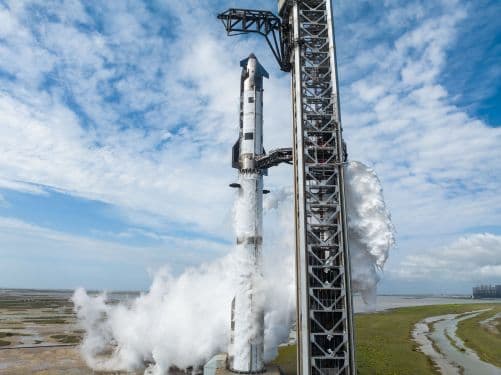
SpaceX SPV investors won’t know their true holdings until post-IPO lock-ups lift
SpaceX makes its public debut on Friday and some investors who backed the company through special purpose vehicles (SPVs) still don’t know how many shares they’re entitled to or whether they’ll get any shares at all. Investing through SPVs, where multiple parties pool their money to invest in a single company, has been around for a while. But SpaceX represents an unprecedented case of an IPO with multiple layers of these vehicles. Since demand for SpaceX allocations has been so high in recent years, investors in an SPV have occasionally formed a new SPV from their shares, creating a structure sometimes stacked four or five layers deep. SpaceX will be the first major test of the legitimacy of multi-layer SPV. In recent months, Anthropic and Anduril have announced that they are disallowing these structures. Nearly a dozen SPV managers and secondary market investors who spoke to TechCrunch said that backers in lower-tier vehicles might find they own fewer shares than they think or, in rare cases, that they may not receive any shares at all. In most situations, these investors won’t learn how many SpaceX shares they actually own until the company’s rolling lock-ups, scheduled to take place over about four months, begin to lift. That’s because SPV managers won’t begin distributing shares to investors in these vehicles until they get access to the shares themselves, sources told TechCrunch. Lock-up agreements prevent insiders, including employees, their friends and family, and venture investors, from selling shares for a set period after an IPO to prevent excessive selling pressure on the stock. The first-layer SPV will have 30 days to distribute stock to its investors, said Justin Ernest, founder and managing partnerof Sabertooth Capital, a firm that invests primarily in first-layer SPVs.Consequently, the next layer down likely won’t get its shares for as long as 30 days, meaning the vehicle below that must wait even longer to deliver stock to its own backers. For the final disbursement, the bottom SPV layer may have to wait eight or nine months, Ernest estimates. A secondary investor, who asked to remain anonymous, told TechCrunch that some investors in “messy” multi-layered SPVs will be surprised to learn that some of the shares they expect to get will be “eroded by fees” pocketed by the SPV. Ideally, the SPV manager communicates with the investors in their vehicle from the IPO date on. “Problem is you have a communication train with each person only knowing what’s going on in the layer above them,” the secondary investor said. In short, the structural ownership of these vehicles has become so highly convoluted that even the best-intentioned SPV sponsors may end up inadvertently misleading their investors. The biggest concern for downstream SPV investors is that they may not get any shares in SpaceX. Giovanni Pennetta, the manager of Sestante Capital, was recently sentenced to four years in prison for fabricating access to non-existent allocations in the defense tech company Anduril. The fear, of course, is that Pennetta is not the only deceptive sponsor out there. Investors at the bottom of these structures essentially had to confirm that every single manager above them was legitimate. But given the messy structures of these deals, it’s likely some buyers didn’t vet the entire chain. “A friend just shared in confidence – they bought SpaceX through a 2 layer SPV in 2021. The returns are supposed to be worth any fees, the only problem – the SPV manager stopped responding to emails or calls,” Nick Davidov, founder of venture firm Davidovs Venture Collective, postedon X last month. He wrote that the investor hasn’t heard from the SPV manager for a year. Idan Miller, managing partner at the secondary market Unicorns Exchange, is convinced that a few other bad actors will be revealed once lock ups expire. “Once the lock up of the shares is removed, and these SPVs will start selling the shares, there will be some vehicles that will be revealed as scammers or fraud,” Miller told TechCrunch.
View
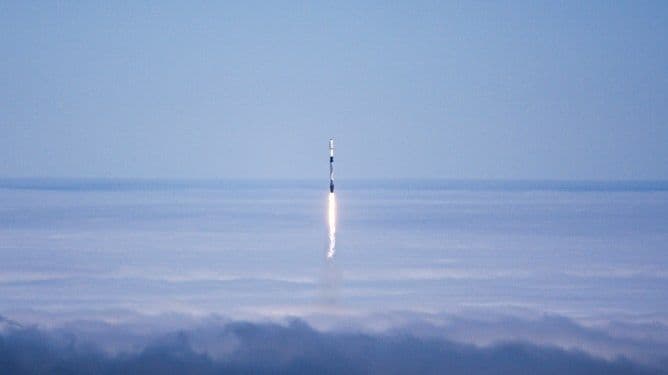
SpaceX officially prices shares at $135 in the largest IPO ever
For once, SpaceX is ahead of schedule: Elon Musk’s space and AI conglomerate officially confirmed that it has raised $75 billion from the sale of its shares to its underwriters, who are set to begin marketing the company on the Nasdaq stock exchange Friday. SpaceX priced its 555.6 million shares at $135 each, the company said in anupdate on its website. That makes SpaceX officially the largest IPO in history, easily eclipsing the $24.9 billion in funds raised by Saudi Aramco during its 2019 public markets debut. At this price, the deal also looks set to make Musk the world’s first trillionaire. The company, officially known as Space Exploration Technologies Corp., will trade under the SPCX ticker symbol. While IPO pricing typically works itself out as markets open, SpaceX took an unusual approach in setting the price well in advance. The company was testing its $135 share target with investors before its official roadshow started, the Financial Timesreported. And that offering, which eschewed traditional IPO pricing practices, attracted four times the available shares,per Bloomberg. As active trading gets underway tomorrow, SpaceX’s share price may sink or rise. But anecdotal reports suggest that big institutional investors and individual buyers are lining up to purchase shares in the 24-year-old technology company. If the sale is as oversubscribed as the talkative bankers make it out to be, they have an option to bring an additional 83.3 million shares to market, which would raise another $11 billion at the company’s opening price. Hyperliquid, a crypto betting market that attempts to offer synthetic exposure to SpaceX stock,currently pricesthe shares at $167, suggesting that market participants expect a classic 20% IPO pop on the first day of trading. In the longer term, there are big open questions about how SpaceX will be able to justify its eye-popping valuation. The company’soutstanding engineering projects, from the world’s largest reusable rocket to a new American chip fab, fill up a daunting to-do list. Thebiggest beneficiary of the offeringis Musk himself. He owns just under 850 million Class A shares entitled to 1 vote per share. He is also entitled to another 5.6 billion Class B shares, which comes with 10 votes per share and includes the billion shares contingent on a long-shot bet that a million people will end up living in a SpaceX colony on Mars. The listing will deliver Antonio Gracias, founder and CEO of Valor Management, 503.4 million shares, putting the value of his position at nearly $68 billion at the IPO price. Other major shareholders poised to gain from the historic offering include SpaceX board member and investor Luke Nosek, who owns 33 million shares, and COO Gwynne Shotwell, who holds nearly 12.6 million shares. The IPO will also deliver significant windfalls to many of the roughly 400 venture capitalists who backed the company during its two decades as a private entity, a period in which it raised about $40 billion in private capital. Additionally, a massive pool of smaller investors who backed SpaceX viaspecial purpose vehicles(SPVs) are also set to see their initial capital multiply. However, due to the complexities of these vehicles, some may not know the exact magnitude of their gains for months after SpaceX make its public market debut. Additionally, an uncountable number of smaller investors who invested in SpaceX via special purpose vehicles (SPVs) may also see their original money multiplied. However, some of these investorswon’t know the magnitudeof their gains or whether they are entitled to them until after the company’s staggered lock-up period expires.
View