Latest AI News
Amazon CEO reportedly raised Anthropic model concerns before government crackdown
Amazon CEO Andy Jassy may have been the source of security concerns that ledAnthropic to cut off worldwide access to two modelson Friday. The Wall Street Journal reports thatJassy told Treasury Secretary Scott Bessent and other government officialsthat Amazon researchers used Anthropic’s Claude Fable 5 to obtain information that could be used in cyberattacks. The government subsequently imposed an export control ban on the Fable 5 and Mythos 5 models. An Amazon spokesperson said in a statement that while it’s “not uncommon for governments to seek our counsel on potential security risks,” the company does not “share the details of those discussions.” The spokesperson also pointed toan updatestating that AWS has been affected by the model cut off. The InformationandReuterssimilarly reported that Amazon (amajor Anthropic investor) had communicated concerns about the security of Anthropic’s models. David Sacks, Trump’s former AI czar who now co-chairs the President’s Council of Advisors on Science and Technology, offered his own account of the discussions,claimingthat “a highly credible trusted partner of both Anthropic and the USG […] came forward with a jailbreak.” Sacks added, “The Admin asked [Anthropic CEO Dario Amodei] to fix the jailbreak or de-deploy the model. Dario refused.” Anthropic said ina blog postthat the capabilities apparently causing government concern are already available in other publicly accessible models. This post has been updated with a statement from an Amazon spokesperson.
View
KPMG pulls report on AI usage due to apparent hallucinations
Professional services firm KPMG has pulled a report titled, “Redefining excellence in the age of agentic AI,” after numerous organizations said the report’s claims about their AI usage were untrue. Research group GPTZero identified a number of inaccuracies in the report, which was published in October 2025. GPTZerotold the FT that the inaccuracies stemmed from AI hallucinations. In other words, the professional services firm appears to have used AI to help write a report about AI. UBS, the UK’s National Health Service, Swiss Federal Railways, and Transport for London all told the FT that the report’s claims about their AI usage were either untrue or misleading. A KPMG spokesperson said the firm removed the report from its websites while conducting its own investigation. “We expect all our people to follow our guidelines on the responsible use of AI, including human oversight to validate content and verify independent sources,” the spokesperson said. Last month,EY withdrew a report on loyalty rewards programsthat appeared to include fake footnotes and AI hallucinations.
View
OpenAI faces investigation from state attorneys general
A coalition of state attorneys general has reportedly opened an investigation into OpenAI. The company wasserved with a subpoena from New York’s attorney general on Friday, according to The Wall Street Journal. That subpoena sought documents related to a broad range of topics including the company’s advertising, user engagement and retention, model sycophancy, handling of consumer data and health data, and treatment of minors and seniors. TechCrunch has reached out to OpenAI and the New York attorney general’s office for confirmation. A company spokesperson told the WSJ that OpenAI is cooperating with the investigation. “AI is a new and powerful technology, and we work every day to safely bring its benefits to people in a responsible way,” the spokesperson said in a statement. “We take the concerns raised by state attorneys general seriously and intend to engage constructively with their offices.” According to Bloomberg, the spokesperson also said that ChatGPT now “includes a more protective experience for minors and people experiencing difficult situations, with safeguards that direct them to real-world resources and trusted human contacts.” The company declined to specify which states are involved in the investigation or to share more details about what information was requested. OpenAI recentlydefeated its co-founder Elon Muskin a high-profile trial, after Musk accused the company of violating its founding agreement. (Musk’s lead attorney said he will appeal the decision.) However, OpenAI still faces lawsuits over everything fromalleged copyright infringementtoChatGPT’s alleged role in suicide. Earlier this month, Florida Attorney General James Uthmeiersued OpenAI and its CEO Sam Altman, claiming that OpenAI and Altman “ignored internal and external safety warnings, put children at great risk, and allowed a dangerous product to reach millions of Floridians.” Altman recentlyapologized to the community of Tumbler Ridge, Canadaafter a mass shooting; he acknowledged that OpenAI failed to alert law enforcement after the company flagged and banned the suspected shooter’s ChatGPT account. The company announced this week that it hasfiled confidentially to go public.
View

Anthropic’s Fable Rollback Exposes India’s Dependence on Foreign AI
The sovereign AI debate has resurfaced again. And the idea of building just use-cases of AI is no longer valid.
View
Anthropic’s safety warnings may have just backfired — the government has pulled the plug on its most powerful AI
The U.S. government on Friday ordered Anthropic to immediately shut off access to two of its most powerful AI models — Claude Fable 5 and Claude Mythos 5 — citing national security concerns. Anthropicannounced on Xthat it has complied, but it made clear it thinks the governmentgot this one wrong. The directive, which Anthropic said it received on Friday at 5:21 pm ET, forces the company to disable both models for all users worldwide — not just the foreign nationals the government’s export control order was nominally aimed at. Access to Anthropic’s other models isn’t affected. Why does any of this matter? Mythos is Anthropic’s most capable AI model, one the companypreviewed in early Apriland has kepttightly restrictedever since because of what Anthropic described as its exceptional ability to find security vulnerabilities in software. According to Anthropic, Mythos identified flaws in every major operating system and web browser it tested, so rather than release it broadly, the company launched a controlled program called Project Glasswing, sharing it with roughly 50 vetted organizations, including Amazon, Apple, Google, Microsoft, and CrowdStrike, to use for defensive cybersecurity work. Fable 5, released just three days ago, was Anthropic’s answer to the obvious commercial pressure: a version of Mythos fitted with guardrails that block responses in high-risk areas like cybersecurity and biology, making it safe enough for general release, the company argued. It was immediately the most capable AI model available to the public, according to benchmark tests from Vals AI, a company that tracks AI tech performance. The government’s directive is framed as an export control action, restricting foreign national access to the models. But in alengthy blog post, Anthropic says its understanding is that the underlying concern is a claimed jailbreak of Fable 5. So far, the company says, the government has provided only verbal evidence of a “potential narrow, non-universal jailbreak” — one that, as Anthropic describes it, amounts to prompting the model to read a specific codebase and identify software flaws. And by the way, adds the company, it’s a “level of capability” that’s already widely available in other publicly accessible models, including OpenAI’s GPT-5.5. It’s also used routinely by cybersecurity professionals for defensive purposes, says Anthropic. Anthropic’s broader argument is that its strongest safeguards operate through independent classifier systems that function separately from the model itself, meaning that even if someone convinces Fable to keep talking past a refusal, the underlying protections against the most dangerous outputs remain in place. Clearly, none of that was enough to stop the government from acting, and Anthropic isn’t hiding its frustration. “We disagree that the finding of a narrow potential jailbreak should be cause for recalling a commercial model deployed to hundreds of millions of people,” the company wrote. “If this standard was applied across the industry, we believe it would essentially halt all new model deployments for all frontier model providers.” Anthropic is widely expected to pursue an IPO this year and has staked much of its public identity on being the safety-conscious alternative to its rivals. The irony isn’t lost on observers that the very caution Anthropic displayed in restricting Mythos — which it promoted as a model so dangerous it couldn’t be released publicly — has now apparently attracted exactly the kind of government scrutiny that could disrupt its business most. OpenAI’s Sam Altman must be enjoying this, at least. In April, he told podcaster Ashlee Vance that Anthropic’s handling of Mythos amounted to “fear-based marketing.” “It is clearly incredible marketing to say, ‘We have built a bomb. We were about to drop it on your head. We will sell you a bomb shelter for $100 million,’” Altman said. Altman, whose company is also widely expected to pursue an IPO as soon as possible, didn’t predict a government shutdown, but he identified something that has come back to bite Anthropic for now, which is that when you spend months telling the world your AI is uniquely dangerous, the world — the U.S. government included — tends to listen.
View
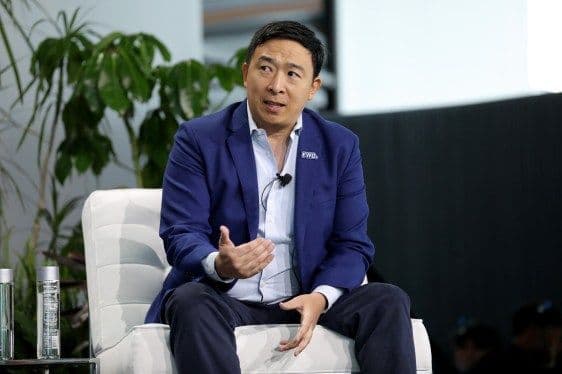
Andrew Yang thinks the next big startup opportunity is lowering the cost of living
Loading the player… Entrepreneur and former presidential candidate Andrew Yang has a theory about where the next wave of startup opportunity lies, and it starts with a question most founders aren’t asking: what if the business model was giving money back instead of extracting it? Yang was inspired by Mark Cuban. Not by his wealth, or his celebrity, but by Cost Plus Drugs — Cuban’s startup that sells pharmaceuticals at cost. Yang made a list. “Housing, education, food, fuel, transportation, media, and wireless,” Yang told TechCrunch on a recent episode ofEquity. “The things we all spend money on.” He picked wireless and last Septemberlaunched Nobile Mobile, a new mobile virtual network operator that provides cell service for a fraction of what traditional carriers charge and gives customers money back if they use less data. As AI threatens to compress wages and displace workers, Yang sees a business opportunity in bringing down the cost of living. Cost Plus Drugs, Noble Mobile, dumb phone makers likeLight Phone, and even online grocery store Misfits Markets are early examples of an emerging business category where the startup’s value proposition is the margin it gives back to the customer. “AI is going to suck up a lot of the value and the jobs, and then Americans are going to look up and say, ‘How do I meet basic needs?’” Yang said. He believes meeting people’s needs “less expensively” is “a very rich vein of opportunity.” That instinct didn’t emerge from nowhere. Yang first launched himself into the public eye during his 2020 presidential campaign, during which he advocated for Universal Basic Income as a means of combating AI-related workforce displacement and wealth concentration. The campaign didn’t succeed but the thesis has only grown more relevant. Yang is still an advocate for UBI, arguing that the value generated by AI companies needs to be redistributed into the hands of the average American. But whether the government will be the vehicle for that redistribution, or whether it will just use any collected wealth to “plug a hole and do something not terribly productive,” Yang is less certain. “There is room for a direct connection between the money and the people,” he said. That’s where the market comes in. Where policy fails, Yang argues, market incentives can step in. Noble Mobile is his attempt to prove the point. Since its launch last September, the company has grown to “thousands and thousands” of customers and is bringing in “millions in revenue.” “We’re unit profitable per customer, but we just share the profits with our subscribers with the idea that it’ll make you happy, you’ll stay around, and maybe you’ll tell your friends and family,” Yang said. The pitch is simple. Yang noted that the average monthly savings of $50, invested and compounded over 40 years, could amount to $24,000 — enough for a retirement down payment. And in thiseconomy, who isn’t thinking about little ways they can upgrade their personal finance? Whether investors will share that enthusiasm is another question entirely. Even if the opportunity is real, capital is concentrated heavily in AI right now, while consumer-facing businesses with thin margins and a social mission are a hard sell. “I had at least one investor say to me around Noble Mobile, ‘Love you, Andrew, want to work with you — if you could just make this an AI company, we’ll invest,’” Yang said. The tide might be changing, though, simply because even the most wealthy, extractive companies need an economy in which consumers have enough buying power to purchase their products. “The value being concentrated in the hands of a handful of folks and firms is just bad for everybody,” he said. “There are some folks I know in Silicon Valley who are open to that for a variety of reasons…[like] they just don’t want to have to hire private security.” Yang encouraged founders and investors to take on problems they’re passionate about and find a way to build a valuable enterprise on top of it. “Think bigger and more broadly about trying to tackle problems and don’t subscribe so much to groupthink, because there are some valuable opportunities out there,” he said.
View
US Orders Anthropic to Block Foreign Nationals From Fable 5 and Mythos 5
Anthropic said the government cited a potential jailbreak technique, though it argued the reported capabilities are already available in other AI models.
View

End of Exam Guides? How AI is Influencing JEE, NEET, UPSC Prep
The rise of AI-powered learning tools is reshaping how students consume educational content, prompting publishers and coaching institutes to evolve beyond book-based teaching.
View
Meta’s months-old AI unit is a soul-crushing gulag, say the engineers stuck inside it
Anyone who works at Meta or knows anyone who works at Meta will tell you the same thing: It is not a happy place, particularly given the seeminglyendlesslayoffsthe company hasexecutedover thelast few years— cuts that have only accelerated as the company funnels billions into AI. Now, anew reportin Wired suggests the company’s Applied AI team is on the verge of revolt. The drama kicked off when someone hijacked a livestreamed, employee-only presentation this week with an expletive-laden meltdown, demanding that attendees tell a senior Meta AI executive that he was “a piece of sh*t.” One presenter reportedly covered their face with their hands. That outburst, Wired reports, reflects simmering rage inside the three-month-old unit of roughly 6,500 engineers and product managers who have been tasked with supporting the company’s AI research ambitions. Employees describe being forced into the group with no real choice: join or quit. Many call themselves “draftees.” Their assigned work? Generating puzzles and coding problems to train AI models. “It’s literally the gulag,” one employee told Wired. “Most people find the work soul-crushing,” said another. Areportlast month in Business Insider shed light on how many employees learned they’d be moved into the group — through a surprise email, a process that one self-described draftee described later on Reddit as “quite random.” According to an internal announcement in April reviewed by Business Insider, Meta’s AI models still lacked the knowledge to outperform humans at technical tasks like coding. “For agents to understand how people actually complete everyday tasks using computers, we need to train our models on real examples,” the post read. In a leaked audio recording from an internal meeting that same month, Meta CEO Mark Zuckerberg explained the logic behind drafting Meta’s own engineers rather than outside contractors: Alexandr Wang — who sold his data-labeling startup Scale AI to Meta for $14.3 billion before taking the chief AI officer role and heading up Meta Superintelligence Labs — knows the data-labeling world well, and the company believes Meta’s average employee has “significantly higher” intelligence than third-party contractors. Better, then, to enlist them. Meanwhile, more than 1,600 Meta employees company-wide have signed a petition protesting a program that monitors their clicks and keystrokes for AI training data. The mood across the company is dark enough that Meta’s chief product officer, Chris Cox, felt compelled to address the “brutal” environment on a call with employees this week. TechCrunch has reached out to Meta for comment. According to earlier reports, the Applied AI team is led by Maher Saba, a 12-year veteran of Meta who was previously a vice president in its Reality Labs division, the division that burned through$83 billionon the metaverse before Meta moved on to AI. The new organization reports up to Meta CTO Andrew Bosworth. Originally, it was structured in such a way that up to 50 employees reported to one manager. Zuckerberg, for his part, reportedly addressed the situation in an internal memo Friday, acknowledging that recent changes had “caused distress” and admitting the company had made mistakes that it plans to address. According to Wired, he added in his memo that “Meta’s north star is to be the best place for the most talented people in the world to make an impact.”
View
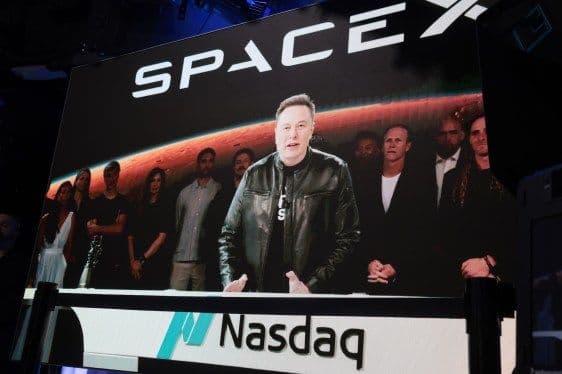
SpaceX IPO: Live updates on everything you need to know
SpaceX has captured the attention of media, investors, and the public for years now — interest propelled by the company’s reusable rocket launches, the rise of its Starlink satellite network, and of course, for its founder and CEO Elon Musk. But in its 24-year history, nothing quite compares to this initial public offering. Everyone seems to be interested, and perhaps it’s because of the sheer size of this IPO. The company priced its 555.6 million shares at $135 each to raise $75 billion, making it the largest IPO in history. At this price, the deal also looks set to make Musk the world’s first trillionaire. TechCrunch has followed SpaceX’s start, struggles, and successes from the early days. And we’re here for what happens next too. This article will be continually updated with all of the latest SpaceX IPO news. SpaceX shares opened at $150 on the Nasdaq public exchange, an 11% pop for the most anticipated debut in history. And it has continued to rise. The shares keep rising too (which we will update here). In midday trading, SpaceX shares soared 30%. SpaceX shares closed at$160.95, up 19%. There has been heavy trading volume, as expected. Robinhood said it has seen“record-breaking trafficon its trading platform in the hours after SpaceX’s historic public markets debut. SpaceX COO Gwynne Shotwell was interviewed by CNBC on Friday and among the many interesting comments she made, here is one that might get the attention of Tesla shareholders. At one point in the interview,Shotwell saida “merger between SpaceX and Tesla might make Elon’s life a little easier.” Among the winners are the banks, which have brought in about$500 millionin total fees. The big winners are Goldman Sachs and Morgan Stanley, per the WSJ. Musk took to X, the social media company he owns, to share his appreciation of SpaceX employees as the stock rose. “I love the incredible people of SpaceX beyond words,”he wrote Friday afternoon. He also reposted a number of SpaceX IPO related posts, including a photo of insiders allwearing green shoesin what appears to be a nod to “the green shoe option.” This is a provision in an IPO underwriting agreement that lets underwriters to sell up to 15% more shares than originally planned if demand is strong. With an offering this large, there is a lot of financial machinery operating behind the scenes — so the first question is just when the stock makes it to the market to start trading. SpaceX is debuting on Nasdaq and you can see the official Nasdaq listinghere, which will have the price of record as soon as there is one. Nasdaq also has video of the SpaceX crewringing the bell, if that’s your thing. But the price is just part of the picture. For the most up-to-the-minute information, your best bet is still financial press outlets likeBloombergandCNBC, both of which have liveblogs running and will have close coverage of any hiccups that happen in getting the stock to market. Here we look at some of the bigger numbers, the consequential figures, and the eyewatering amounts that make up the company’s S-1 form. For instance, SpaceX lost $4.9 billion on revenues of over $18 billion in 2025. That’s only a fraction of the more than $37 billion lost since SpaceX’s inception. As CEO, Elon Musk holds about 85.1% of the company’s voting power. You can read more about that in the next section “Who wins and who doesn’t” — and we’ll continue to drop interesting numbers in here. Here is another figure that caught our attention… 4,400. That’s the number of SpaceX employees who could become millionaires,according to the NYT. Elon Musk can’t hear you over the sound of his $1.75 trillion IPO: The Equity podcast weighs in on the IPO. SpaceX is the world’s largest IPO in history and means a big payday for some investors, employees, and of course, Elon Musk. Elon Musk becomes the world’s first trillionaire after SpaceX’s historic IPO: The SpaceX IPO has boosted Musk’s paper wealth to more than $1,000,000,000,000 at a time when he is more hated — and powerful — than ever.How Elon Musk will increase his power through the SpaceX IPO: Musk, who will have more than 50% of the voting power, will have a monarchical grip over the publicly traded version of SpaceX — control that goes far beyond what other tech founders enjoy. Who will benefit most from SpaceX IPO? Mostly Elon — and a few from his inner circle: Elon Musk has the largest stake in SpaceX by billions of shares, but others also stand to win. Here’s the rundown of who owns what. SpaceX SPV investors won’t know their true holdings until post-IPO lock-ups lift: After SpaceX makes its public debut, lower-tier SPV investors face hidden fees, lengthy payout delays, and the risk of outright fraud. The S-1 registration documentgave the world an unprecedented look inside SpaceX, including its financials and its various businesses. The S-1 continued to be amended as the IPO date approached, and we were on it. Here is what we found. The SpaceX IPO filing is filled with AI bets, Starship dreams, and Elon Musk at the center:The contents of the SpaceX IPO details a business dominated by its Starlink satellite internet offering, more than $37 billion in losses, and future business prospects through its xAI division. Starship’s path to reusability looks murky after SpaceX’s S-1: SpaceX’s IPO and Starship rocket test flight delivered two big data points that offer a realistic vision for the coming years — and one that may disappoint both the company’s boosters and its critics. SpaceX warns investors of future dilution, adding fuel to Tesla merger rumors: The company added new language to its S-1, a warning to prospective investors that a major dilution could be in the cards after it goes public. Leading up to the IPO, SpaceX locked in a string of deals, mostly selling off compute to improve its balance sheet. Anthropic will pay xAI $1.25B per month for compute: Initial coverage of the Anthropic deal on May 20. How long is Anthropic’s lease with SpaceX? Opinions vary: Elon Musk keeps downplaying the duration of SpaceX’s contract with Anthropic. Google will pay SpaceX $920M per month for compute: A Google representative described the deal as a short-term deal addressing unexpected demand for its recently launched AI products. This article originally published at 10 am ET, June 12, 2026. It has been updated with new coverage of the SpaceX IPO, share price, and other related events.
View
Chinese cybercrime operation that used AI to scam ‘hundreds of thousands of victims’ sued by Google
Google is suing to dismantle the infrastructure behind an alleged massive AI-powered cybercrime operation. On Friday, the tech giantannounceda lawsuit against an alleged Chinese cybercrime network called Outsider Enterprise, which Google says uses AI in its campaigns to send scam text messages impersonating Google and other brands to steal passwords and credit card numbers. Outsider Enterprise has financially scammed “hundreds of thousands of victims” with losses “estimated in the millions.” The group deployed 9,000 fake websites, one million fraudulent web domains, and 2.5 million texts sent to Android users in a two-week period, according to Google. The company said, “55,000 spam texts were flagged by Android users in just two weeks this past May — that’s more than two text spam complaints a minute.” Google said it uses “AI-powered tools to fight AI-powered scams,” which enable the company to detect scams and alert users of suspicious calls and text messages, leading to the interception of more than 10 billion scam messages a month. The company said it has been collaborating with AT&T, T-Mobile, and Verizon to block the scam text messages, and said it is coordinating with the FBI. An FBI spokesperson told TechCrunch that the bureau, in coordination with Google and Lumen’s Black Lotus Labs, seized several domains used by the cybercriminals, as well as Shopify storefronts and accounts used to test the operation’s phishing service. The spokesperson said that since July 2023, Outsider Enterprise’s phishing platform enabled cybercriminals to steal “at least an estimated 3,870,000 stolen credit cards and a corresponding estimated $1.9B in losses.” In its complaint filed as part of the lawsuit, Google laid out the evidence it gathered against people involved in the Outsider Enterprise operations, whom the company said are foreign-based cybercriminals whose real identities are unknown. This group “built, maintains, and uses a turn-key, online software suite that enables criminals, regardless of technical skill, to publish fraudulent websites designed to rob victims and enrich themselves,” according to the complaint. Google said this “phishing-for-dummies” software called Outsider, which costs $88 per week or $200 per month, allows operators to create fake websites with the help of AI platforms, including Google’s own Gemini. The fake sites impersonate several services and companies, such as telecom providers, financial institutions, government agencies, and retailers. To lure people to the fake websites, the cybercriminals collaborate with one another to send victims malicious text messages, or purchase ads. The common goal is to steal passwords and corresponding multi-factor codes as well as financial information, which the scammers can do by receiving the data that victims input into the fake websites, with the information being transmitted through Outsider’s platform in real time. “Part of the Outsider software’s appeal is the ease with which someone with limited technical expertise — like many members of the Enterprise— can purchase the software, execute various phishing attacks, and, upon purchase, meet other members of the Enterprise who are proficient in other areas,” Google wrote, referring to Telegram channels where the cybercriminals can collaborate, train each other, discuss strategies, and develop phishing attacks. “The Enterprise brazenly coordinates its efforts in open and largely uncoded discussions on Telegram.” According to Google, the Outsider platform allegedly offers cybercriminals “more than 290 pre-built templates that mimic the legitimate websites” that generate replicas of real websites “in minutes,” along with guides on how to “weaponize AI-generated code,” as well as a dashboard to track progress of phishing campaigns. The cybercriminals have allegedly used Google Drive and Google Cloud infrastructure to host the phishing websites. “The Outsider software has been used to create over a million phishing websites to swindle innocent victims out of millions of dollars,” Google wrote in the complaint. To give an idea of the scale of Outsider Enterprise’s operation, Google said that over a five-month period, from November 14, 2025 to April 14, 2026, the company detected more than 1.59 million URLs connected to it. Google said the Outsider Enterprise operation is made up of several groups of cybercriminals: those who develop and maintain the phishing software and website templates; those who supply lists of targets curated from public records, social media, and data breaches; a “spammer group” that provides toolsand theinfrastructure to send scam texts in bulk, which includes smartphone banks, SIM cards, and modems; and those who monetize the stolen credentials and launder the stolen money. The cybercriminals have stolen “at least 36,000 payment cards issued by financial institutions in 95 countries,” according to Google. The company accused the people behind Outsider Enterprise of impersonating Google and its brands, of infringing its copyright, of racketeering activities, of committing wire fraud, and false advertising. With the lawsuit, Google is seeking compensatory and punitive damages, and an order to stop the criminals from carrying out their activities. This story was originally published at 10:26 a.m. PDT and has since been updated with new information from Google’s complaint, and the FBI’s comment.
View
It’s hot IPO summer, and the MANGOS are ripe
The IPO market is back, and it’s not the same companies leading the charge. FAANG had a good run, but anew acronym is taking over: MANGOS— Meta (or Microsoft, depending on who you ask), Anthropic, Nvidia, Google, OpenAI, and SpaceX. Half of that bunch is heading to public markets in the same window, and it’s a stress test for investors, for valuations, and for what we can even expect from a public tech company in 2026. On this episode of TechCrunch’sEquitypodcast, hosts Kirsten Korosec, Anthony Ha, and Sean O’Kane break down what this IPO moment actually means beyond the headline numbers, and who stands to benefit. Listen to the full episode to hear: Subscribe to Equity onYouTube,Apple Podcasts,Overcast,Spotifyand all the casts. You also can follow Equity onXandThreads, at @EquityPod.
View