AI NewsRed Hat’s OpenClaw maintainer just made enterprise Claw deployments a lot safer

Red Hat’s OpenClaw maintainer just made enterprise Claw deployments a lot safer

10:17 PM IST · April 28, 2026

Red Hat’s OpenClaw maintainer just made enterprise Claw deployments a lot safer

On Tuesday, Red Hat principal software engineer Sally O’Malleyreleaseda new open source tool called Tank OS to make it easier to deploy and manage OpenClaw agents more safely. “This was a fun project that I put together on the weekend that I knew would be a really good fit for AI and where we’re going,” she told TechCrunch, adding that she wanted to give it “to the masses.” Tank OS is geared toward power users looking to run OpenClaw on their own computers and toward IT pros managing fleets of corporate OpenClaw agents. It makes OpenClaw safer and easier to maintain en masse. Countless people, companies, and startups are already inventing better ways to work with OpenClaw — theopen source projectthat installs an AI agent on a local computer. There is also a growing number of startups building competing claw alternatives that they say are safer (like NanoClaw). What makes O’Malley’s project notable is that she is an OpenClaw maintainer. That means she’s among the select software engineers working with creator Peter Steinberger to decide which features and bugs get worked on. In her case, she focuses on making OpenClaw work better in enterprise use cases, and with Red Hat’s various flavors of the Linux operating system. (While Steinbergerwas hired by OpenAI,hestill leads the independent open source OpenClawproject.) O’Malley joined OpenClaw because she sees it working to “enable everyone to run AI in a safe way, that’s open,” she said. But she got to thinking about what will happen when OpenClaw invades an enterprise and decided to build a tool for that eventuality. She began with an open source container tool called Podman, created by a colleague at Red Hat. Containers are a way to run apps separately from the underlying computer, with everything the app needs to run, bundled together. They can run a Linux app on a Windows or Mac machine, for instance. Podman is a particularly secure way to do this because it’s “rootless,” meaning it doesn’t give the containers any privileges from the underlying machine, Red Hat says. Tank OS loads OpenClaw onto Red Hat’s Fedora Linux OS in a Podman container and makes that container a bootable image, meaning it will run and launch OpenClaw when you start the computer. Her tool includes everything needed to make OpenClaw useful without human oversight, like state (the part that allows it to remember); the ability to store API keys (the credentials for accessing subscriptions and services); and other features. Users can run multiple Tank OS instances on a machine to do different tasks, never sharing passwords or credentials between them, and no OpenClaw instance can gain access to anything else running on the computer. While O’Malley knows that the OpenClaw project is working to make the agent safer, she says that “it’s an incredibly powerful application,” but can also be “dangerous” if not configured properly. “It’s not a tool that you can use easily unless you do have some sort of technical experience,” she said. Stories abound, such as the Meta AI security researcherwhose Claw started deleting all of her work email,or an agent thatdownloaded in plain text all of a user’s WhatsApp DMs.There’s also a growingcrop of malwareaimed at OpenClaw users. To be sure, Tank OS isn’t really for techno novices either, she says. You have to be comfortable installing and maintaining software on your computer, she says. Tank OS is also not the only OpenClaw implementation working in containers.NanoClaw, for instance, is doing a similar thingwith well-known container company Docker. But Tank OS is intended to be especially useful for IT pros (aka, Red Hat’s main customers) who may one day manage fleets of OpenClaw agents on corporate computers. It allows them to update the agents the same way they already manage other containers. “My role within OpenClaw is really my interest in it,” O’Malley said. “How it’s going to look scaled out when there are millions of these autonomous agents talking to one another.”

read more

Latest AI News

View All News →
Google gains 25M subscriptions in Q1, driven by YouTube and Google One

Google gains 25M subscriptions in Q1, driven by YouTube and Google One

Google has added another 25 million paid subscriptions to its services over the past quarter, parent company Alphabet announced during its first-quarterearningsreport on Wednesday. The company said it now has 350 million paid subscriptions across its services,up from 325 million in Q4 2025, with YouTube and Google One — its cloud storage and subscription service — plans driving the recent growth. Theearnings reportdidn’t highlight the number of Gemini subscribers or its monthly active users. But access to advancedGemini featuresis now bundled in with thoseGoogle One plans, which are growing. The lack of solid numbers may suggest that the Gemini chatbot still has more than 750 million users, the same benchmark reportedin the prior quarter. Google pointed to the growth of Gemini in the key enterprise market, noting a 40% quarter-over-quarter increase in paid monthly active users. It did not offer a solid number here, either. YouTube ad revenue missed Wall Street expectations, even as it continued to grow year over year. As Google pushes ad-free viewing as part of its YouTube Premium subscription plan, the video service has seen a decline in ad revenue that has worried investors. PerCNBC, Wall Street expected Alphabet to bring in $9.99 billion in YouTube ad revenue this quarter, but it pulled in $9.88 billion. Alphabet CEO Sundar Pichai had warned analysts last quarter that investors should evaluate YouTube’s business going forward based on a combination of ads and subscriptions: When users switch to a YouTube subscription plan, it has a negative impact on ad revenue. Last year, YouTube’s annual revenue topped $60 billion across both ads and subscriptions, with Q4 2025 bringing in $11.4 billion in YouTube ads alone. This quarter, the YouTube ads figure was $9.9 billion. That’s up 11% year-over-year, the company pointed out, but a shortfall on analyst expectations suggests that consumers are continuing to move from ad-supported YouTube viewing to ad-free subscriptions through YouTube Premium. We expect to hear more about this on the company’s earnings call. Either way, Alphabet’s stock is up after surpassing Wall Street’s expectations, with revenue of $109.9 billion, which included healthy cloud growth. Cloud revenue alone topped $20 billion.

2 hours ago

View

Google Cloud surpasses $20B, but says growth was capacity-constrained

Google Cloud surpasses $20B, but says growth was capacity-constrained

Google Cloud, the business under parent company Alphabet that provides enterprise AI solutions, had a blowout first quarter, with revenues topping $20 billion for the time, a 63% increase from the same period last year. However, investors on the company’s earnings call expressed concern about the constraints surrounding the business and how Google decides to allocate cloud capacity. In thefirst quarter of 2026, the company said its cloud growth was driven by strong performance in the Google Cloud Platform, which grew at a higher rate than the Google Cloud division’s overall revenue growth. (The Cloud division includes a variety of services like infrastructure, data analytics, AI/ML tools, and Google Workspace.) Alphabet CEO Sundar Pichai told analysts on the Q1 2026 earnings call on Wednesday that this growth came from “strong demand” for Gemini Enterprise and its AI solutions, and pointed to an increased demand for infrastructure, including TPU hardware and data centers. AI solutions were the largest driver of cloud growth, with products built on Google’s genAI models growing nearly 800% year-over-year. Google Gemini Enterprise also grew 40% quarter-over-quarter, the company said, and AI token growth via its API grew to 16 billion tokens per minute, up from 10 billion in the fourth quarter. Pichai noted other cloud milestones, including new customer acquisition doubling year-over year, deal momentum doubling the number of $100 million to $1 billion deals year-over-year, with the company signing multiple “billion-dollar-plus” deals. Customers also outpaced their initial commitments by 45% quarter-over-quarter, he said. Still, the exec warned, there were constraints to this growth, noting that Google Cloud’s backlog had doubled in the quarter to $462 billion. He spun this as a positive for the company, noting that it demonstrated how Google Cloud was different from other competitors. “Obviously, we are compute constrained in the in the near-term,” Pichai said. “And as an example, our cloud revenue would have been higher if we were able to meet that demand. So we are working through that moment, and we are investing, but we have a robust, long-range planning framework…we see extraordinary opportunities ahead,” he added. The company expects to work through 50% of the backlog over the next “24 months,” it said. Much of the company’s revenue potential comes from providing infrastructure through the cloud, and, with some customers, the direct sale ofTPUhardware as well. Pichai told investors that Google takes an approach that considers the return on capital investment (ROIC), which helps it to continue to properly invest in the “cutting edge.”

2 hours ago

View

Microsoft says it has over 20M paid Copilot users, and they really are using it

Microsoft says it has over 20M paid Copilot users, and they really are using it

Despite thelingering perceptionthat no one really uses Copilot, Microsoft said Wednesday that its user base and engagement are growing for the AI tool that’s baked into M365 apps like Word, Excel, and Outlook email. M365 Copilot now has 20 million paid enterprise Copilot seats, Microsoft CEO Satya Nadella said during the company’s quarterly earnings conference call. The company has quadrupled the number of companies paying for over 50,000 seats, Nadella said, noting that Bayer, Johnson & Johnson, Mercedes, and Roche have more than 90,000 seats. He pointed to the dealannounced earlier this weekwith Accenture for over 740,000 seats. “Our largest Copilot win to date,” he said. Plus, he insists that people are using it, engaging with Copilot as much as they do with email. “Copilot queries per user were up nearly 20% quarter over quarter. To put this momentum in perspective, weekly engagement is now at the same level as Outlook,” he said. “This is like a daily habit of intense usage.” He emphasized that Copilot is not dependent on any one model, like OpenAI. “You now have access in chat to multiple models by default, with intelligent auto routing in agents with critique and counsel, you can use multiple models together to generate optimal responses,” he said. Microsoft 365 supports Anthropic’s Claude, for instance. In fact, Morgan Stanley’s Keith Weiss said on the quarterly earnings call on Wednesday, “Those Microsoft 365 Copilot numbers are super impressive and I think way ahead of most people’s expectations.” Agent mode is one area that is driving usage, noting that “as of last week, Agent mode is now the default experience across Copilot and Word Excel and PowerPoint.” Microsoft last week made its Copilot’sagentic capabilities generally available. This allows Copilot to take multi-step actions directly in the documents. “You now have a new way to delegate and complete work using Copilot,” Nadella said.

2 hours ago

View

Satya Nadella says he’s ready to ‘exploit’ the new OpenAI deal

Satya Nadella says he’s ready to ‘exploit’ the new OpenAI deal

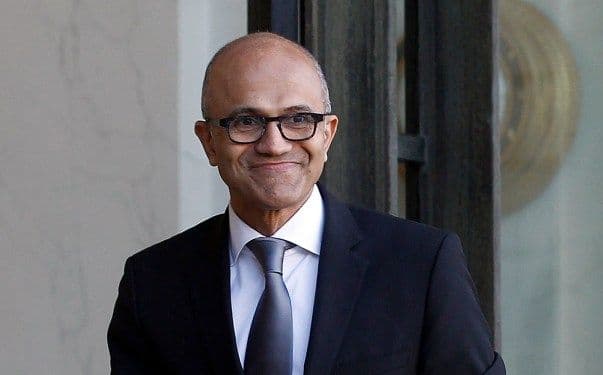
Microsoft CEO Satya Nadella was asked point-blank bya Wall Street analyston Wednesday how its revised OpenAI partnership would impact Microsoft’s financials. He said that the new agreement was a good deal for everyone. “We feel good about our partnership with OpenAI. I’m always very focused on any partnership and ensuring that there’s a win-win construct at all times. I mean, that’s how you can remain good partners.” He underscored that Microsoft has retained its access to OpenAI’s intellectual property — including its models and agent products — but that it no longer has to pay OpenAI for them. Referring to royalty-free access to OpenAI’s most advanced AI through 2032, Nadella said: “We have a frontier model, with all the IP rights that we will have access to all the way to ’32 and we fully plan to exploit it.” There was certainly plenty of ink spilled speculating that the new deal, inwhich Microsoft no longer has exclusive access to OpenAI’s tech, would causethe software giant to lose its edge in AI.OpenAI immediately announcedexclusive AI products with Microsoft’s largest cloud rival, Amazon(complete with Sam Altman and AWS CEO Mark Garmandoing interviewsabout their collaboration). But Nadella shrugged off those concerns. When Microsoft reportedearnings on Wednesday— the last full quarter under the previous deal — the company reported that its AI business has surpassed an annual revenue run rate of $37 billion, up 123% year-over-year. On that point, Nadella noted that Microsoft collects money from OpenAI in other ways. “They’re a large customer of ours, not just on the AI accelerator side, but also on all the other compute sides. And so we want to serve them well. And then, of course, we have our equity.” By that he’s referring to OpenAI’s commitment to buy more than than $250 billion worth of Microsoft’s cloud services, and Microsoft’s 27% stake in OpenAI. Finally, Nadella emphasized that enterprises often want to use multiple AI models, so OpenAI’s relative importance in the industry, especially to enterprises, is not as far ahead as it once was. “We offer the broadest selection of models of any hyperscaler, so customers can choose the right model for the right workload across OpenAI, Anthropic, open source, and more. Over 10,000 customers have used more than one model,” he said. Time will tell if this deal is really a win-win. In the meantime, Microsoft keeps delivering cloud growthand profits.

2 hours ago

View