AI NewsBCI startup Neurable looks to license its ‘mind-reading’ tech for consumer wearables

BCI startup Neurable looks to license its ‘mind-reading’ tech for consumer wearables

10:17 PM IST · April 28, 2026
BCI startup Neurable looks to license its ‘mind-reading’ tech for consumer wearables

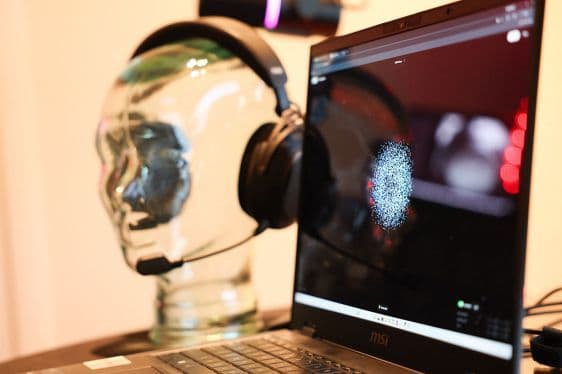
BCI (brain-computer interface) technology — in which neural signals are routed from a person’s head to a computer — was once the stuff of science fiction, but these days the technology represents a competitive corner of the tech industry. One of the companies racing to commercialize BCI isNeurable, which this week announced that it’s looking to license its “mind-reading” technology to consumer wearables. Neurable specializes in “non-invasive” BCI, which distinguishes itself fromfirms like Neuralink— the Elon Musk-founded startup known for inserting computer chips directly into people’s skulls — in that its product doesn’t require users to undergo brain surgery to enjoy its benefits. Neurable’s technology works through a combination of EEG sensors and signal processing that can scan a user’s brain activity, analyze it with AI, and provide information about a person’s cognitive performance. In December, Neurableraised $35 million in a Series A, which it plans to use to scale the commercialization of its technology. This week, the company announced that, as part of its expansion effort, it is looking to license its technology to a variety of consumer-facing companies. The idea is that mind-reading tech (which can provide detailed data about how a person’s brain works while they’re engaged in various activities) could be integrated into wearables across a number of industries — including health and athletic products, productivity tools, and gaming. “Through Neurable’s licensing platform, OEMs can directly integrate its AI-powered brain-sensing technology into existing hardware, such as headphones, hats, glasses, and headbands, while maintaining full control over product design, user experience, and distribution,” the company said in a press release on Tuesday. Neurable has already fostered partnerships with a number of companies to test out its effectiveness. This includes HP Inc.’s HyperX, a gaming brand, with which itcreated a headsetdesigned to help gamers “level up their game play by optimizing focus and performance.” It has also partnered witha company called iMotions, a software platform that specializes in human behavior research, to assist with the company’s research initiatives. In an interview, Neurable’s CEO Ramses Alcaide declined to say what new partnerships the company has in the works, but said that the company was seeking to expand its purview across a host of domains. “In the past, we were very specific about our partnerships,” Alcaide said, noting that Neurable tended to home in on a particular company to prove that a unique commercial application was worthwhile. Now that they know expectations can be met on a number of fronts, the startup is focused on scaling itself, he said. “What we’re doing now is we’re basically saying, like, ‘Hey, we’ve demonstrated that we’re getting great traction’,” Alcaide said. “Like, let’s make this as ubiquitous as heart rate sensors on your wrist, right?” Despite the “non-invasive” label, brain data is arguably a little bit more intimate than the information culled from a heart rate sensor, so what kind of privacy protections does a company like Neurable provide? Alcaide said that the company ensures that user data is “protected and anonymized.” The company’s privacy policy provides avariety of different guidelinesfor when and how a user’s data might be accessed and used. “We make sure we follow HIPAA standards, like we’ve gone above and beyond where a lot of startups would be at our stage to make sure that we protect the data, we encrypt it, and that we anonymize it,” Alcaide said. Does Neurable leverage a user’s neural data to train its AI software? “We can with user consent, right?” said Alcaide. “But we do it in a very specific way.” That specific way involves asking the user whether their data can be used for the purposes of particular experiments, Alcaide said. “We are not collecting the data, just training on it willy-nilly,” he said. In other words, this kind of data usage is quite targeted. Alcaide said that his industry is at an “inflection point” — one wherein there finally exists “a real business model in neuro-technology that is scalable.” What comes after that inflection point is the big question.

read more
Latest AI News

View All News →
Google gains 25M subscriptions in Q1, driven by YouTube and Google One

Google gains 25M subscriptions in Q1, driven by YouTube and Google One

Google has added another 25 million paid subscriptions to its services over the past quarter, parent company Alphabet announced during its first-quarterearningsreport on Wednesday. The company said it now has 350 million paid subscriptions across its services,up from 325 million in Q4 2025, with YouTube and Google One — its cloud storage and subscription service — plans driving the recent growth. Theearnings reportdidn’t highlight the number of Gemini subscribers or its monthly active users. But access to advancedGemini featuresis now bundled in with thoseGoogle One plans, which are growing. The lack of solid numbers may suggest that the Gemini chatbot still has more than 750 million users, the same benchmark reportedin the prior quarter. Google pointed to the growth of Gemini in the key enterprise market, noting a 40% quarter-over-quarter increase in paid monthly active users. It did not offer a solid number here, either. YouTube ad revenue missed Wall Street expectations, even as it continued to grow year over year. As Google pushes ad-free viewing as part of its YouTube Premium subscription plan, the video service has seen a decline in ad revenue that has worried investors. PerCNBC, Wall Street expected Alphabet to bring in $9.99 billion in YouTube ad revenue this quarter, but it pulled in $9.88 billion. Alphabet CEO Sundar Pichai had warned analysts last quarter that investors should evaluate YouTube’s business going forward based on a combination of ads and subscriptions: When users switch to a YouTube subscription plan, it has a negative impact on ad revenue. Last year, YouTube’s annual revenue topped $60 billion across both ads and subscriptions, with Q4 2025 bringing in $11.4 billion in YouTube ads alone. This quarter, the YouTube ads figure was $9.9 billion. That’s up 11% year-over-year, the company pointed out, but a shortfall on analyst expectations suggests that consumers are continuing to move from ad-supported YouTube viewing to ad-free subscriptions through YouTube Premium. We expect to hear more about this on the company’s earnings call. Either way, Alphabet’s stock is up after surpassing Wall Street’s expectations, with revenue of $109.9 billion, which included healthy cloud growth. Cloud revenue alone topped $20 billion.

2 hours ago

View

Google Cloud surpasses $20B, but says growth was capacity-constrained

Google Cloud surpasses $20B, but says growth was capacity-constrained

Google Cloud, the business under parent company Alphabet that provides enterprise AI solutions, had a blowout first quarter, with revenues topping $20 billion for the time, a 63% increase from the same period last year. However, investors on the company’s earnings call expressed concern about the constraints surrounding the business and how Google decides to allocate cloud capacity. In thefirst quarter of 2026, the company said its cloud growth was driven by strong performance in the Google Cloud Platform, which grew at a higher rate than the Google Cloud division’s overall revenue growth. (The Cloud division includes a variety of services like infrastructure, data analytics, AI/ML tools, and Google Workspace.) Alphabet CEO Sundar Pichai told analysts on the Q1 2026 earnings call on Wednesday that this growth came from “strong demand” for Gemini Enterprise and its AI solutions, and pointed to an increased demand for infrastructure, including TPU hardware and data centers. AI solutions were the largest driver of cloud growth, with products built on Google’s genAI models growing nearly 800% year-over-year. Google Gemini Enterprise also grew 40% quarter-over-quarter, the company said, and AI token growth via its API grew to 16 billion tokens per minute, up from 10 billion in the fourth quarter. Pichai noted other cloud milestones, including new customer acquisition doubling year-over year, deal momentum doubling the number of $100 million to $1 billion deals year-over-year, with the company signing multiple “billion-dollar-plus” deals. Customers also outpaced their initial commitments by 45% quarter-over-quarter, he said. Still, the exec warned, there were constraints to this growth, noting that Google Cloud’s backlog had doubled in the quarter to $462 billion. He spun this as a positive for the company, noting that it demonstrated how Google Cloud was different from other competitors. “Obviously, we are compute constrained in the in the near-term,” Pichai said. “And as an example, our cloud revenue would have been higher if we were able to meet that demand. So we are working through that moment, and we are investing, but we have a robust, long-range planning framework…we see extraordinary opportunities ahead,” he added. The company expects to work through 50% of the backlog over the next “24 months,” it said. Much of the company’s revenue potential comes from providing infrastructure through the cloud, and, with some customers, the direct sale ofTPUhardware as well. Pichai told investors that Google takes an approach that considers the return on capital investment (ROIC), which helps it to continue to properly invest in the “cutting edge.”

2 hours ago

View

Microsoft says it has over 20M paid Copilot users, and they really are using it

Microsoft says it has over 20M paid Copilot users, and they really are using it

Despite thelingering perceptionthat no one really uses Copilot, Microsoft said Wednesday that its user base and engagement are growing for the AI tool that’s baked into M365 apps like Word, Excel, and Outlook email. M365 Copilot now has 20 million paid enterprise Copilot seats, Microsoft CEO Satya Nadella said during the company’s quarterly earnings conference call. The company has quadrupled the number of companies paying for over 50,000 seats, Nadella said, noting that Bayer, Johnson & Johnson, Mercedes, and Roche have more than 90,000 seats. He pointed to the dealannounced earlier this weekwith Accenture for over 740,000 seats. “Our largest Copilot win to date,” he said. Plus, he insists that people are using it, engaging with Copilot as much as they do with email. “Copilot queries per user were up nearly 20% quarter over quarter. To put this momentum in perspective, weekly engagement is now at the same level as Outlook,” he said. “This is like a daily habit of intense usage.” He emphasized that Copilot is not dependent on any one model, like OpenAI. “You now have access in chat to multiple models by default, with intelligent auto routing in agents with critique and counsel, you can use multiple models together to generate optimal responses,” he said. Microsoft 365 supports Anthropic’s Claude, for instance. In fact, Morgan Stanley’s Keith Weiss said on the quarterly earnings call on Wednesday, “Those Microsoft 365 Copilot numbers are super impressive and I think way ahead of most people’s expectations.” Agent mode is one area that is driving usage, noting that “as of last week, Agent mode is now the default experience across Copilot and Word Excel and PowerPoint.” Microsoft last week made its Copilot’sagentic capabilities generally available. This allows Copilot to take multi-step actions directly in the documents. “You now have a new way to delegate and complete work using Copilot,” Nadella said.

2 hours ago

View

Satya Nadella says he’s ready to ‘exploit’ the new OpenAI deal

Satya Nadella says he’s ready to ‘exploit’ the new OpenAI deal

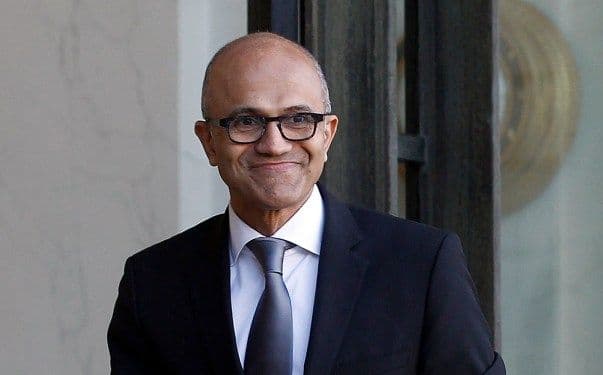
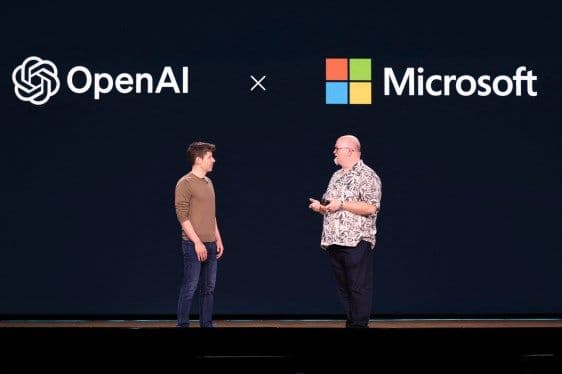
Microsoft CEO Satya Nadella was asked point-blank bya Wall Street analyston Wednesday how its revised OpenAI partnership would impact Microsoft’s financials. He said that the new agreement was a good deal for everyone. “We feel good about our partnership with OpenAI. I’m always very focused on any partnership and ensuring that there’s a win-win construct at all times. I mean, that’s how you can remain good partners.” He underscored that Microsoft has retained its access to OpenAI’s intellectual property — including its models and agent products — but that it no longer has to pay OpenAI for them. Referring to royalty-free access to OpenAI’s most advanced AI through 2032, Nadella said: “We have a frontier model, with all the IP rights that we will have access to all the way to ’32 and we fully plan to exploit it.” There was certainly plenty of ink spilled speculating that the new deal, inwhich Microsoft no longer has exclusive access to OpenAI’s tech, would causethe software giant to lose its edge in AI.OpenAI immediately announcedexclusive AI products with Microsoft’s largest cloud rival, Amazon(complete with Sam Altman and AWS CEO Mark Garmandoing interviewsabout their collaboration). But Nadella shrugged off those concerns. When Microsoft reportedearnings on Wednesday— the last full quarter under the previous deal — the company reported that its AI business has surpassed an annual revenue run rate of $37 billion, up 123% year-over-year. On that point, Nadella noted that Microsoft collects money from OpenAI in other ways. “They’re a large customer of ours, not just on the AI accelerator side, but also on all the other compute sides. And so we want to serve them well. And then, of course, we have our equity.” By that he’s referring to OpenAI’s commitment to buy more than than $250 billion worth of Microsoft’s cloud services, and Microsoft’s 27% stake in OpenAI. Finally, Nadella emphasized that enterprises often want to use multiple AI models, so OpenAI’s relative importance in the industry, especially to enterprises, is not as far ahead as it once was. “We offer the broadest selection of models of any hyperscaler, so customers can choose the right model for the right workload across OpenAI, Anthropic, open source, and more. Over 10,000 customers have used more than one model,” he said. Time will tell if this deal is really a win-win. In the meantime, Microsoft keeps delivering cloud growthand profits.

2 hours ago

View